

Geoscience & Seismic Processing
Seismic processing centres, built and run from 128 to 4,096 cores.
Fennec designs and equips turnkey seismic processing centres (servers, InfiniBand interconnect, SAN/NAS storage and HPC cluster management) and processes 2D, 3D and 4D data in a GeoVision 1.3 environment, from pre-stack migration to full-waveform inversion.
Request a proposal- Processing cores, scaled in doubling steps
- 128 → 4,096
- Survey types, including high-density 3D
- 2D · 3D · 4D
- Time and depth imaging, plus AVO and FWI
- PSTM · PSDM
- Centre delivery, from plan to running cluster
- A → Z
01.ATurnkey processing centres
A complete processing centre, from floor plan to first migrated volume.
We plan, supply and commission every layer, then hand over a running cluster with the processing environment configured.
- 01
Engineering plan
Workload sizing, power, cooling and rack layout.
- 02
Compute supply
Servers sized to the chosen core tier.
- 03
InfiniBand network
Low-latency interconnect between nodes.
- 04
SAN / NAS storage
Fast storage for high-density survey data.
- 05
Cluster & software
OS, scheduler, cluster management and the GeoVision 1.3 environment.
01.BScalable computing cores
Choose the core tier your survey needs.
Capacity scales in doubling steps from 128 to 4,096 cores and beyond. Move the slider to see what each tier is typically used for.
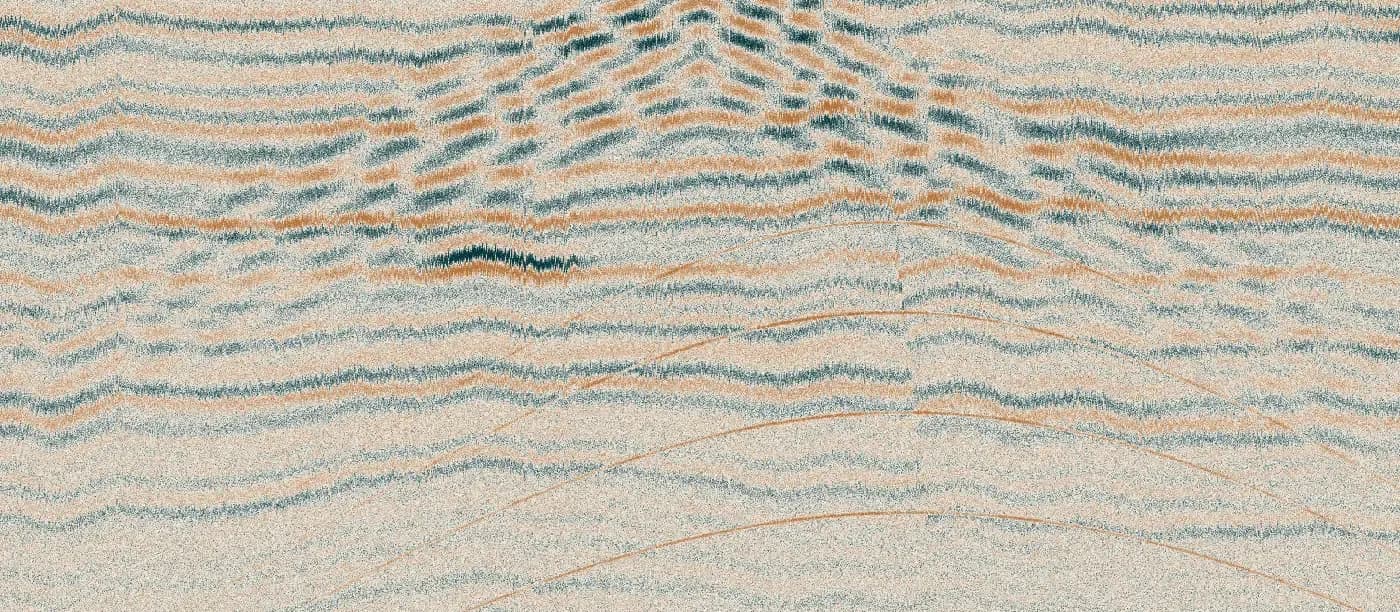
01.CBefore and after processing
The same data, before and after the work.

01.1Imaging & inversion
From raw gathers to an image you can drill on.
Each method is run on the core tier the survey needs, with parameters and QC recorded at every stage.
Pre-stack time migration (PSTM)
Fast, robust imaging for structurally moderate areas and for first-pass interpretation of new surveys.
Pre-stack depth migration (PSDM)
Depth imaging with velocity model building for complex structure, salt and strong lateral velocity change.
AVO analysis
Amplitude-versus-offset studies to separate lithology and fluid effects ahead of well placement.
Full-waveform inversion (FWI)
High-resolution velocity models from the full recorded wavefield; the most compute-intensive step, sized to the upper core tiers.
01.2Interpretation & analysis
Interpretation, mapping and models that show their uncertainty.
Processing is only half the job. Our geoscientists turn the image into structure, surface context and a model your team can question.
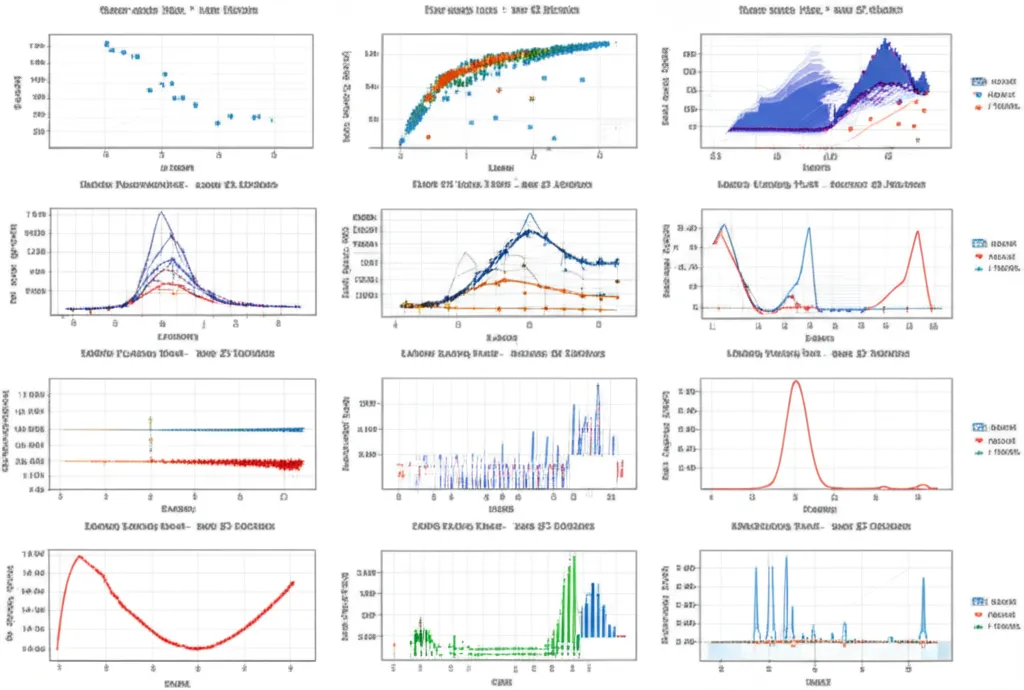
Subsurface interpretation
Seismic, well and geological data combined into a single view of structure, signal and uncertainty.
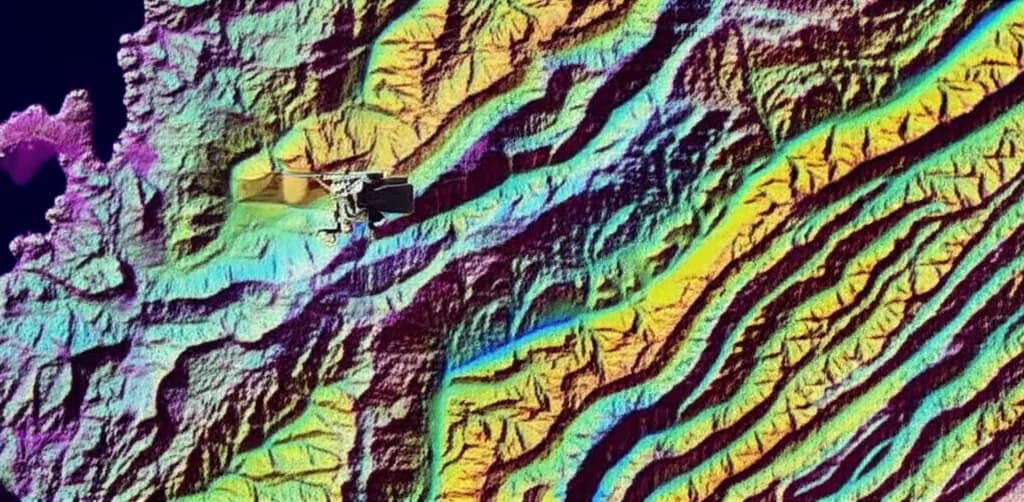
Remote sensing & mapping
Hyperspectral, LiDAR and field observations that add surface context to the subsurface picture.
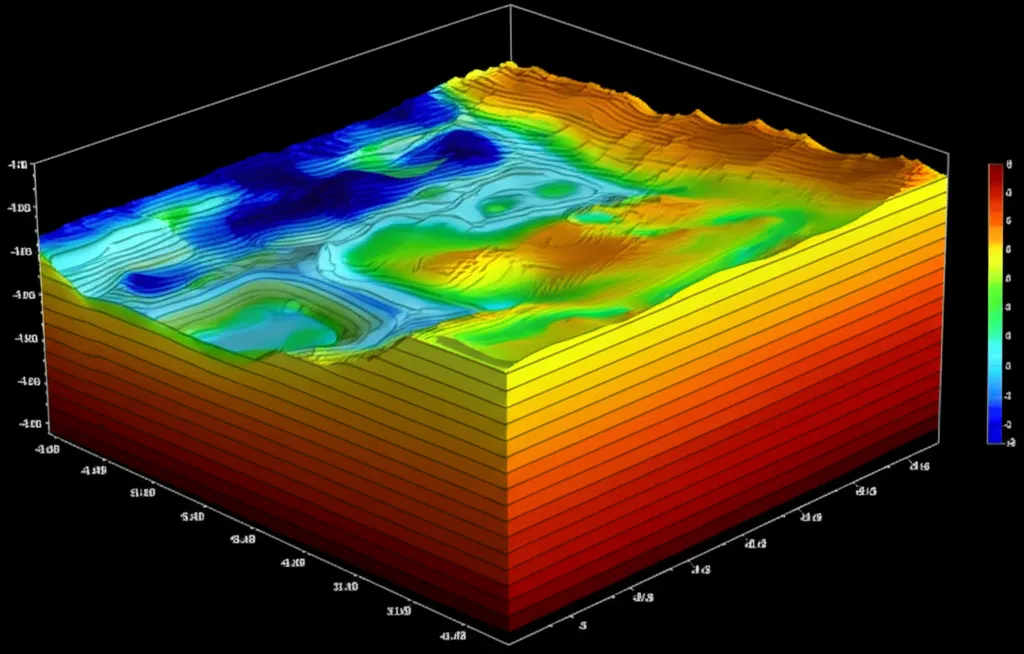
3D modeling & uncertainty
Geological models, seismic inversion and uncertainty analysis presented so assumptions stay discussable.
Technical notes
Read how we approach it.
Questions
Common questions
How many processing cores do we need?
It depends on survey size and method. As a guide, 128–256 cores suit 2D lines, testing and post-stack work; 512–1,024 cores suit full 3D PSTM and PSDM; 2,048–4,096+ cores suit high-density 3D/4D surveys and FWI. We size the tier from your data volume and turnaround target.
What does a turnkey processing centre include?
Engineering plan (workload, power, cooling, layout), server supply, high-speed InfiniBand interconnect, SAN/NAS storage, operating system and HPC cluster management, and setup of the processing software environment.
Which software environment do you use?
Processing and analysis run in a GeoVision 1.3 environment (CGG), supporting PSTM, PSDM, AVO and FWI workflows on the allocated cores.
Other Fennec disciplines
Contact
Send the short version. We’ll reply with the right engineer.
Choose a topic and your email app opens with the key questions already listed. Answer what you can; a few lines is enough to start.
info@fennecgeo.com